Pico Laser: Pigmentation, Melasma and Tattoo Removal
Pico laser fires ultra-short pulses that shatter pigment: sun spots, some brown patches, tattoo ink. What it can do, how many sessions to plan, and why melasma needs caution.
Key points
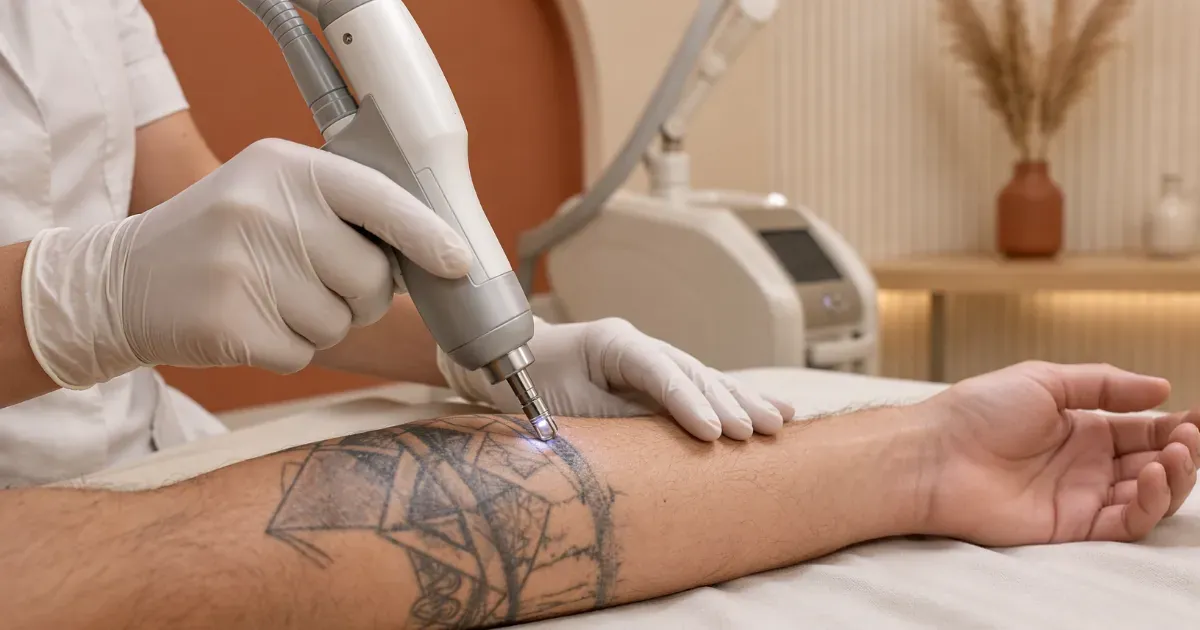
- Picosecond lasers emit pulses lasting a trillionth of a second, breaking pigment into particles the body clears.
- They treat sun spots, freckles, some brown patches and tattoos.
- Tattoo removal often takes 6 to 10 sessions or more, 6 to 8 weeks apart.
- Melasma can improve but often returns: laser is only part of the treatment.
- Sun protection is essential before and after sessions.
How pico laser works
Q-switched lasers, used for years, emit nanosecond pulses. Picosecond lasers are about a thousand times faster. The energy breaks pigment mechanically rather than by heat, into finer particles the body then clears.
Less heat generally means less risk of marks afterwards, which matters on olive skin.
Uses
| Indication | Usual sessions | Comment |
|---|---|---|
| Sun spots (lentigines) | 1 to 3 | Very good results |
| Freckles | 1 to 3 | Can return with sun |
| Melasma | Several, low energy | Possible improvement, frequent recurrence |
| Black or dark blue tattoo | 6 to 10 or more | Easiest colours to treat |
| Coloured tattoo | Variable | Some colours (green, yellow) are more resistant |
| Skin texture, pores | 3 to 5 | With a fractional handpiece |
Tattoo removal in practice
After each session, the tattoo turns white for a few minutes, then small crusts may form. Ink fades gradually over the following weeks as the lymphatic system clears it, so you need 6 to 8 weeks between sessions.
The number of sessions depends on the amount and depth of ink, colours, the tattoo's age and location. Amateur tattoos often fade faster than dense professional ones.
Want a medical opinion on your plans?
Send us your photos and questions: an Evitalink adviser passes them on to a partner doctor.
📋 Request a free quote 💬 WhatsAppMelasma
Melasma is facial pigmentation driven by sun, hormones (pregnancy, the pill) and heat. It is common on olive skin. Low-energy laser can lighten it, but aggressive laser can make it worse.
- the foundation remains daily sun protection and a prescribed lightening cream
- laser is an add-on with gentle settings
- recurrence is common: maintenance is often needed
Aftercare and risks
- redness and mild swelling for a few hours to days
- small crusts, to be left to fall off
- less often: lighter or darker patches, blisters, scarring
Avoid sun for 4 weeks before and after, and mention any photosensitising medicine.
Any spot that changes, bleeds or looks different from the others must be examined by a dermatologist before any laser.
With Evitalink
Send a photo of your spots or tattoo, with its size and age. A partner doctor in Casablanca tells you the likely number of sessions and whether to add a lightening treatment.
Myths and facts
| Myth | Fact |
|---|---|
| Pico laser removes a tattoo in one session. | It often takes 6 to 10 sessions or more. |
| Laser cures melasma. | It improves it, but melasma often returns without strict sun protection. |
| All colours fade the same way. | Black fades best; some colours resist. |
Your questions answered
How many sessions to remove a tattoo?
Does pico laser hurt?
Is pico laser suitable for darker skin?
Can melasma be treated with laser?
When do sun spots fade?
Want a personalised opinion before deciding?
Send us your request: an Evitalink adviser replies with a partner doctor's opinion and a detailed, free, no-obligation quote.
This article is for information only and does not replace medical advice. Prices and protocols are confirmed in your personalised quote. Contact: +33 752 965 568.